


![Nosferatu [Masters of Cinema] [Blu-ray]](/pictures/1124400.jpg) Nosferatu | Blu Ray | (18/11/2013)
from £13.05
| Saving you £6.94 (53.18%)
| RRP
Nosferatu | Blu Ray | (18/11/2013)
from £13.05
| Saving you £6.94 (53.18%)
| RRP An iconic film of the German expressionist cinema and one of the most famous of all silent movies F. W. Murnau's Nosferatu: A Symphony of Horror continues to haunt - and indeed terrify - modern audiences with the unshakable power of its images. By teasing a host of occult atmospherics out of dilapidated set-pieces and innocuous real-world locations alike Murnau captured on celluloid the deeply-rooted elements of a waking nightmare and launched the signature Murnau-style that would change cinema history forever. In this first-ever screen adaptation of Bram Stoker's Dracula a simple real-estate transaction leads an intrepid businessman deep into the superstitious heart of Transylvania. There he encounters the otherworldly Count Orlok - portrayed by the legendary Max Schreck in a performance the very backstory of which has spawned its own mythology - who soon after embarks upon a cross-continental voyage to take up residence in a distant new land... and establish his ambiguous dominion. As to whether the count's campaign against the plague-wracked populace erupts from satanic decree erotic compulsion or the simple impulse of survival - that remains perhaps the greatest mystery of all in this film that's like a blackout... Remade by Werner Herzog in 1979 (and inspiring films as diverse as Abel Ferrara's King of New York and The Addiction and E. Elias Merhige's Shadow of the Vampire) F. W. Murnau's surreal 1922 cine-fable remains the original and landmark entry in the entire global tradition of the horror film. The Masters of Cinema Series is proud to present newly restored on 1080p Blu-ray at long last Nosferatu: A Symphony of Horror in its definitive restoration complete with original intertitles and accompanied by the score that played with the film at the time of its initial release. Special Features: Brand new high-definition restoration by Friedrich-Wilhelm-Murnau-Stiftung Two audio commentaries: one newly recorded by film historian David Kalat; the second by historian R. Dixon Smith and critic Brad Stevens The Language of Shadows a 53-minute documentary on Murnau's early years and the filming of Nosferatu New video interview with BFI Film Classics Nosferatu author Kevin Jackson Newly translated English subtitles with original German intertitles More surprises to be revealed closer to release date! PLUS: a 56-page booklet featuring writings and rare imagery
 Early Murnau - Five Films (Schloß Vogelöd, Phantom, Der Letzte Mann, The Grand Duke's Finances, Tartuffe) (Masters of Cinema) (Blu-ray) | Blu Ray | (26/09/2016)
from £N/A
| Saving you £N/A (N/A%)
| RRP
Early Murnau - Five Films (Schloß Vogelöd, Phantom, Der Letzte Mann, The Grand Duke's Finances, Tartuffe) (Masters of Cinema) (Blu-ray) | Blu Ray | (26/09/2016)
from £N/A
| Saving you £N/A (N/A%)
| RRP One of the most influential and revered figures in all of cinema, Friedrich Wilheim Murnau came to prominence in the first half of the 1920's with a diverse string of productions ranging from buoyant satire to swirling psychological drama. Five key works are presented here: Schloà Vogelöd, Phantom, Die Finanzen des GroÃherzogs (the Grand Duke's Finances, Der Letzte Mann (The Last Laugh) and Tartuffe. In the sinister mystery Schloà Vogelöd, terrible secrets from the past threaten a group of aristocrats' gathering at a country manor. In the delirious Phantom, an aspiring poet's change encounter with a beautiful woman leads into obsession and deception. The delightful Die Finanzen des GroÃherzogs sees a rakish-but-impoverished duke setting out to rebuild his fortune via blissfully comic high adventure on the Mediterranean coast. In Der Letzte Mann, one of the undisputed masterpieces of the silent era, Emil Jannings gives an overwhelming performance as a hotel porter with dreams of a higher station in life, and was a stylistic breakthrough for both Murnau and cinema in general. Finally, the slyly satiric Tartuffe features Jannings as Moliere's iconic creation in a morality tale film-within-a-film as only Murnau could conceive. This collection features new high-definition transfers of all five films from the finest archival elements, all on Blu-ray for the first time in a special edition three-disc set. Click Images to Enlarge
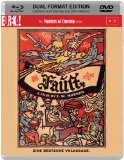 FAUST (Masters of Cinema) (DVD & BLU-RAY DUAL FORMAT) | Blu Ray | (18/08/2014)
from £14.65
| Saving you £5.34 (36.45%)
| RRP
FAUST (Masters of Cinema) (DVD & BLU-RAY DUAL FORMAT) | Blu Ray | (18/08/2014)
from £14.65
| Saving you £5.34 (36.45%)
| RRP Shot in the UFA studios with a big movie star in the lead and all the special effects and production design resources any blockbuster of its time could wish for, FW Murnau's 1926 Faust represents a step up from his better-known Nosferatu. Oddly, Faust is a less familiar film than the vampire quickie and this release affords fans a chance to see what Murnau can do with an equally major fantasy story. Adapted neither from Marlowe's play Dr Faustus nor Goethe's verse drama, the script scrambles various elements of the legend and presents a Faust (Gosta Ekman) driven to summon the Devil by despair as a plague rages through the town, desperate to gain enough learning to help his neighbours. When this deal doesn't quite work out, because he is stoned by townsfolk who notice his sudden fear of the cross, Mephisto (Emil Jannings) offers Faust instead renewed youth and an opportunity to seduce a famously beautiful Italian noblewoman and then to return to his home village and get involved with the pure Gretchen (Camilla Horn). Like most versions of the story, it's episodic and some sections are stronger than others: the great stuff comes in the plague and initial deal sequences, though it picks up again for the tragic climax as Gretchen becomes the central figure and suffers horribly, freezing in the snows and burning at the stake. Jannings' devil, a gruesomely humorous slice of ham, is one of the great silent monster performances, reducing everyone else to a stick figure, and Murnau faces the challenge of topping his Nosferatu imagery by deploying a battalion of effects techniques to depict the many magical journeys, sudden appearances and transformations. On the DVD: Often seen in ragged, incomplete prints projected at the wrong speed, this is a decently restored version, running a full 115 minutes with a complete orchestral score. The original materials show some of the damage to be expected in a film of its vintage, but the transfer is excellent, displaying the imaginative art direction and camerawork to superb advantage. Aside from a nicely eerie menu, the sole extra is a full-length commentary originating in Australia: written by historian Peter Spooner but read by narrator Russell Cawthorne (who mispronounces the odd name). This provides an interesting wealth of background detail, such as Murnau's attempt to cast Hollywood's Lillian Gish as Gretchen, and delivers a balanced assessment of the film itself. --Kim Newman
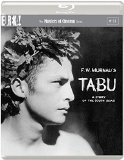 TABU: A STORY OF THE SOUTH SEAS (Masters of Cinema) (BLU-RAY) | Blu Ray | (24/06/2013)
from £8.75
| Saving you £11.24 (128.46%)
| RRP
TABU: A STORY OF THE SOUTH SEAS (Masters of Cinema) (BLU-RAY) | Blu Ray | (24/06/2013)
from £8.75
| Saving you £11.24 (128.46%)
| RRP In 1929 F. W. Murnau (Nosferatu Faust Sunrise) one of the greatest of all film directors invited leading documentarist Robert Flaherty (Nanook of the North Man of Aran) to collaborate on a film to be be shot on location in Tahiti a Polynesian idyll in which Murnau imagined a cast of island actors would provide a new form of authentic drama and offer rare insight into their primitive culture. The result of their collaboration was Tabu a film that depicts the details of indigenous island life to tell a mythical tale that is rich in the universal themes of desire and loss. Subtitled A Story of the South Seas Tabu concerns a Tahitian fisherman (played by an islander Matahi) and his love for a young woman (played by fellow islander Reri who went on to star on Broadway) whose body has been consecrated to the gods rendering her tabu as far as mortal men are concerned. The lovers flee their island and its restrictive traditions but will their love prevail in the civilised world? This Oscar-winning film (the Academy Award went to cinematographer Floyd Crosby) is both poetic and simple in tone. The Masters of Cinema Series is proud to present - completely uncensored and fully restored - this landmark film of rare exoticism and magical beauty described by critic Lotte Eisner in 1931 as the apogee of the art of the silent film for the first time ever on Blu-ray in its original aspect ratio. Special Features: New 1080p HD transfer on the Blu-ray of the Murnau-Stiftung / Luciano Berriatúa 75th anniversary restoration of the pre-Paramount longer Murnau-approved version of the film with uncensored scenes and titlecards appearing in its original 1.19:1 aspect ratio for the first time Full-length commentary track by R. Dixon Smith and Brad Stevens 15-minute German documentary about Tabu by Luciano Berriatúa Newly presented outtakes from the original shoot of the film Treibjagd in der Südsee (1940) - an archival short film 56-Page Booklet with articles by Scott Eyman Richard Griffiths and David Flaherty; an interview with the film’s cinematographer Floyd Crosby; and the original story treatments written by Murnau and Flaherty for Tabu and its aborted predecessor Turia
![Nosferatu (2013 Restoration) [Masters of Cinema] [DVD]](/pictures/1124402.jpg) Nosferatu (2013 Restoration) | DVD | (18/11/2013)
from £N/A
| Saving you £N/A (N/A%)
| RRP
Nosferatu (2013 Restoration) | DVD | (18/11/2013)
from £N/A
| Saving you £N/A (N/A%)
| RRP An iconic film of the German expressionist cinema and one of the most famous of all silent movies F. W. Murnau's Nosferatu: A Symphony of Horror continues to haunt - and indeed terrify - modern audiences with the unshakable power of its images. By teasing a host of occult atmospherics out of dilapidated set-pieces and innocuous real-world locations alike Murnau captured on celluloid the deeply-rooted elements of a waking nightmare and launched the signature Murnau-style that would change cinema history forever. In this first-ever screen adaptation of Bram Stoker's Dracula a simple real-estate transaction leads an intrepid businessman deep into the superstitious heart of Transylvania. There he encounters the otherworldly Count Orlok - portrayed by the legendary Max Schreck in a performance the very backstory of which has spawned its own mythology - who soon after embarks upon a cross-continental voyage to take up residence in a distant new land... and establish his ambiguous dominion. As to whether the count's campaign against the plague-wracked populace erupts from satanic decree erotic compulsion or the simple impulse of survival - that remains perhaps the greatest mystery of all in this film that's like a blackout... Remade by Werner Herzog in 1979 (and inspiring films as diverse as Abel Ferrara's King of New York and The Addiction and E. Elias Merhige's Shadow of the Vampire) F. W. Murnau's surreal 1922 cine-fable remains the original and landmark entry in the entire global tradition of the horror film. The Masters of Cinema Series is proud to present newly restored on 1080p Blu-ray at long last Nosferatu: A Symphony of Horror in its definitive restoration complete with original intertitles and accompanied by the score that played with the film at the time of its initial release. Special Features: Two audio commentaries: one newly recorded by film historian David Kalat; the second by historian R. Dixon Smith and critic Brad Stevens The Language of Shadows a 53-minute documentary on Murnau's early years and the filming of Nosferatu New video interview with BFI Film Classics Nosferatu author Kevin Jackson Newly translated English subtitles with original German intertitles More surprises to be revealed closer to release date! PLUS: a 56-page booklet featuring writings and rare imagery
![Der letzte Mann (aka The Last Laugh) [Masters of Cinema]](/pictures/1078076.jpg) Der letzte Mann (aka The Last Laugh) | DVD | (21/01/2008)
from £N/A
| Saving you £N/A (N/A%)
| RRP
Der letzte Mann (aka The Last Laugh) | DVD | (21/01/2008)
from £N/A
| Saving you £N/A (N/A%)
| RRP Der letzte Mann (also known as The Last Laugh although its original title translates to ""The Last Man"") depicts the tale of an elderly hotel doorman (played by the inimitable Emil Jannings) whose superiors have come to deem his station as transitory as the revolving doors through which he has ushered guests in and out day upon day decade after decade. Reduced to polishing tiles beneath a sink in the gents' lavatory and towelling the hands of Berlin's most-vulgar barons the doorman soon uncovers the ironical underside of old-world hospitality. And then - one day - his fate suddenly changes...
![Phantom/Die Finanzen Des Großherzogs [Masters of Cinema] [DVD]](/pictures/1096783.jpg) Phantom/Die Finanzen Des Großherzogs | DVD | (19/10/2009)
from £N/A
| Saving you £N/A (N/A%)
| RRP
Phantom/Die Finanzen Des Großherzogs | DVD | (19/10/2009)
from £N/A
| Saving you £N/A (N/A%)
| RRP Two Films by F.W. Murnau. After filming the landmark Nosferatu the silent cinema's master innovator F. W. Murnau demonstrated the reach of his genre versatility with a pair of films that explored the dimensions of the psychodrama and the adventure-programmer. All the Murnau characteristics are present: a vibrant naturalism exquisite imagery passages of dreamlike revery and an atmosphere redolent with romantic longing. In Phantom an aspiring poet on the verge of what he takes for a big break experiences a chance encounter with a beautiful woman in the street - and falls headlong into love and fantasy. With debts piling up and his promised literary celebrity failing to materialise the poet descends into obsession deception and ultimately a criminal act in this delirious film that stands as an early precursor of Hitchcock's Vertigo. Die Finanzen des Grossherzogs sees Murnau exploiting the Mediterranean clime to film the tale of a rakish duke whose lifestyle has dried up his noble coffers. When word arrives about the existence of valuable sulphur deposits on his tiny duchy of Abacco a comic adventure of high-seas intrigue animal impersonators and the Crown Princess of Russia unreels at a sprightly pace. Max Schreck (the mythic actor behind the makeup of Nosferatu's Count Orlok two years earlier) appears in a supporting role in what might be Murnau's nimblest effort.
![Classic Horror Volume 1 (Nosferatu, Hunchback Of Notre Dame, The Phantom Of The Opera, George Orwell's 1984) [DVD]](/pictures/1131631.jpg) Classic Horror Volume 1 (Nosferatu, Hunchback Of Notre Dame, The Phantom Of The Opera, George Orwell's 1984) | DVD | (31/03/2014)
from £11.05
| Saving you £1.94 (17.56%)
| RRP
Classic Horror Volume 1 (Nosferatu, Hunchback Of Notre Dame, The Phantom Of The Opera, George Orwell's 1984) | DVD | (31/03/2014)
from £11.05
| Saving you £1.94 (17.56%)
| RRP Nosferatu (1922): Vampire Count Orlok expresses interest in a new residence and real estate agent Hutter's wife. Silent classic based on the story Dracula. Nosferatu, released in 1922, was the first screen adaptation of Bram Stoker's Dracula. Nearly 80 years on, it remains among the most potent and disturbing horror films ever made. The sight of Max Schreck's hollow-eyed, cadaverous vampire rising creakily from his coffin still has the ability to chill the blood. Nor has ...
![Nosferatu Ltd. Edition Steelbook [Masters of Cinema] Dual Format [Blu-ray & DVD]](/pictures/1124403.jpg) Nosferatu Ltd. Edition Steelbook | Blu Ray | (18/11/2013)
from £31.98
| Saving you £N/A (N/A%)
| RRP
Nosferatu Ltd. Edition Steelbook | Blu Ray | (18/11/2013)
from £31.98
| Saving you £N/A (N/A%)
| RRP An iconic film of the German expressionist cinema and one of the most famous of all silent movies F. W. Murnau's Nosferatu: A Symphony of Horror continues to haunt - and indeed terrify - modern audiences with the unshakable power of its images. By teasing a host of occult atmospherics out of dilapidated set-pieces and innocuous real-world locations alike Murnau captured on celluloid the deeply-rooted elements of a waking nightmare and launched the signature Murnau-style that would change cinema history forever. In this first-ever screen adaptation of Bram Stoker's Dracula a simple real-estate transaction leads an intrepid businessman deep into the superstitious heart of Transylvania. There he encounters the otherworldly Count Orlok - portrayed by the legendary Max Schreck in a performance the very backstory of which has spawned its own mythology - who soon after embarks upon a cross-continental voyage to take up residence in a distant new land... and establish his ambiguous dominion. As to whether the count's campaign against the plague-wracked populace erupts from satanic decree erotic compulsion or the simple impulse of survival - that remains perhaps the greatest mystery of all in this film that's like a blackout... Remade by Werner Herzog in 1979 (and inspiring films as diverse as Abel Ferrara's King of New York and The Addiction and E. Elias Merhige's Shadow of the Vampire) F. W. Murnau's surreal 1922 cine-fable remains the original and landmark entry in the entire global tradition of the horror film. The Masters of Cinema Series is proud to present newly restored on 1080p Blu-ray at long last Nosferatu: A Symphony of Horror in its definitive restoration complete with original intertitles and accompanied by the score that played with the film at the time of its initial release. Special Features: Brand new high-definition restoration by Friedrich-Wilhelm-Murnau-Stiftung Two audio commentaries: one newly recorded by film historian David Kalat; the second by historian R. Dixon Smith and critic Brad Stevens The Language of Shadows a 53-minute documentary on Murnau's early years and the filming of Nosferatu New video interview with BFI Film Classics Nosferatu author Kevin Jackson Newly translated English subtitles with original German intertitles More surprises to be revealed closer to release date! PLUS: a 56-page booklet featuring writings and rare imagery
 Nosferatu (1922) - Two-disc set | DVD | (22/01/2001)
from £N/A
| Saving you £N/A (N/A%)
| RRP
Nosferatu (1922) - Two-disc set | DVD | (22/01/2001)
from £N/A
| Saving you £N/A (N/A%)
| RRP Nosferatu ... the name alone can chill the blood!". F.W. Murnau's Nosferatu, released in 1922, was the first (albeit unofficial) screen adaptation of Bram Stoker's Dracula. Nearly 80 years on, it remains among the most potent and disturbing horror films ever made. The sight of Max Schreck's hollow-eyed, cadaverous vampire rising creakily from his coffin still has the ability to chill the blood. Nor has the film dated. Murnau's elision of sex and disease lends it a surprisingly contemporary resonance. The director and his screenwriter Henrik Gaalen are true to the source material, but where most subsequent screen Draculas (whether Bela Lugosi, Christopher Lee, Frank Langella or Gary Oldman) were portrayed as cultured and aristocratic, Nosferatu is verminous and evil. (Whenever he appears, rats follow in his wake.)The film's full title--Nosferatu, eine Symphonie des Grauens (Nosferatu, A Symphony of Horror)--reveals something of Murnau's intentions. Supremely stylised, it differs from Robert Wiene's The Cabinet of Dr Caligari (1919) or Ernst Lubitsch's films of the period in that it was not shot entirely in the studio. Murnau went out on location in his native Westphalia. As a counterpoint to the nightmarish world inhabited by Nosferatu, he used imagery of hills, clouds, trees and mountains (it is, after all, sunlight that destroys the vampire). It's not hard to spot the similarity between the gangsters in film noir hugging doorways or creeping up staircases with the image of Schreck's diabolic Nosferatu, bathed in shadow, sidling his way toward a new victim. Heavy chiaroscuro, oblique camera angles and jarring close-ups--the devices that crank up the tension in Val Lewton horror movies and edgy, urban thrillers such as Double Indemnity and The Postman Always Rings Twice--were all to be found first in Murnau's chilling masterpiece. --Geoffrey MacnabOn the DVD: This two-disc set gives you the choice of watching Nosferatu in either a sepia-tinted version or the original black & white. Both, however, feature the same modern electronic music score by Art Zoyd (at the movie's lavish 1922 premiere a live orchestra performed a newly composed, quasi-Wagnerian score by Hans Erdmann). The anonymous commentary track is a scholarly critical appraisal of the movie that exhaustively documents every aspect of it, from Murnau's aesthetic use of framing devices to the homoerotic subtext of the Hutter-Orlock relationship. In the "Nosferatour" featurette the movie's locations (principally, the Baltic cities of Wismer and Lubeck) are shown as they are today, and there is also a look at the original artwork that served as Murnau's inspiration. Two text features provide a brief history of the vampire myth from Vlad the Impaler onwards, as well as a discussion of the controversy caused by the movie's release. Appropriately, a trailer for the John Malkovich-Willem Dafoe movie Shadow of the Vampire, which imagines that "Max Schreck" actually was a vampire employed by Murnau in his obsessive pursuit of verisimilitude, is also included. --Mark Walker
![Nosferatu (Definitive Fully-restored version with original score) [Masters of Cinema] [1921]](/pictures/1076454.jpg) Nosferatu (Definitive Fully-restored version with original score) | DVD | (19/11/2007)
from £N/A
| Saving you £N/A (N/A%)
| RRP
Nosferatu (Definitive Fully-restored version with original score) | DVD | (19/11/2007)
from £N/A
| Saving you £N/A (N/A%)
| RRP An iconic film of the German expressionist cinema and one of the most famous of all silent movies F. W. Murnau's Nosferatu: A Symphony of Horror continues to haunt - and indeed terrify - modern audiences with the unshakable power of its images. By teasing a host of occult atmospherics out of dilapidated set-pieces and innocuous real-world locations alike Murnau captured on celluloid the deeply-rooted elements of a waking nightmare and launched the signature ""Murnau-style"" that would change cinema history forever. In this first-ever screen adaptation of Bram Stoker's Dracula a simple real-estate transaction leads an intrepid businessman deep into the superstitious heart of Transylvania. There he encounters the otherworldly Count Orlok - portrayed by the legendary Max Schreck in a performance the very backstory of which has spawned its own mythology - who soon after embarks upon a crosscontinental voyage to take up residence in a distant new land... and establish his ambiguous dominion. As to whether the count's campaign against the plague-wracked populace erupts from satanic decree erotic compulsion or the simple impulse of survival - that remains perhaps the greatest mystery of all in this film that's like a blackout...
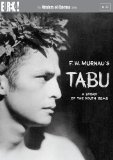 TABU: A STORY OF THE SOUTH SEAS (Masters of Cinema) (DVD) | DVD | (24/06/2013)
from £17.53
| Saving you £0.46 (2.62%)
| RRP
TABU: A STORY OF THE SOUTH SEAS (Masters of Cinema) (DVD) | DVD | (24/06/2013)
from £17.53
| Saving you £0.46 (2.62%)
| RRP In 1929 F. W. Murnau (Nosferatu Faust Sunrise) one of the greatest of all film directors invited leading documentarist Robert Flaherty (Nanook of the North Man of Aran) to collaborate on a film to be be shot on location in Tahiti a Polynesian idyll in which Murnau imagined a cast of island actors would provide a new form of authentic drama and offer rare insight into their primitive culture. The result of their collaboration was Tabu a film that depicts the details of indigenous island life to tell a mythical tale that is rich in the universal themes of desire and loss. Subtitled A Story of the South Seas Tabu concerns a Tahitian fisherman (played by an islander Matahi) and his love for a young woman (played by fellow islander Reri who went on to star on Broadway) whose body has been consecrated to the gods rendering her tabu as far as mortal men are concerned. The lovers flee their island and its restrictive traditions but will their love prevail in the civilised world? This Oscar-winning film (the Academy Award went to cinematographer Floyd Crosby) is both poetic and simple in tone. The Masters of Cinema Series is proud to present - completely uncensored and fully restored - this landmark film of rare exoticism and magical beauty described by critic Lotte Eisner in 1931 as the apogee of the art of the silent film for the first time ever on Blu-ray in its original aspect ratio.
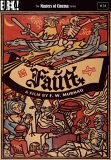 Faust | DVD | (26/06/2006)
from £N/A
| Saving you £N/A (N/A%)
| RRP
Faust | DVD | (26/06/2006)
from £N/A
| Saving you £N/A (N/A%)
| RRP Murnau's last German film features astonishing photography magnificent art direction and special effects which retain the power to amaze. Freed from the constraints of psychological narrative Murnau's mastery of cinematic technique places Faust at the pinnacle of the silent era its barrage of visceral and apocryphal imagery contrasting with the simplicity and directness of its spiritual theme. Faust's tale is a classic one of a man who sells his soul to the devil. In an attempt
![Faust [1926]](/pictures/1012911.jpg) Faust | DVD | (21/01/2002)
from £20.00
| Saving you £-0.01 (N/A%)
| RRP
Faust | DVD | (21/01/2002)
from £20.00
| Saving you £-0.01 (N/A%)
| RRP Shot in the UFA studios with a big movie star in the lead and all the special effects and production design resources any blockbuster of its time could wish for, FW Murnau's 1926 Faust represents a step up from his better-known Nosferatu. Oddly, Faust is a less familiar film than the vampire quickie and this release affords fans a chance to see what Murnau can do with an equally major fantasy story. Adapted neither from Marlowe's play Dr Faustus nor Goethe's verse drama, the script scrambles various elements of the legend and presents a Faust (Gosta Ekman) driven to summon the Devil by despair as a plague rages through the town, desperate to gain enough learning to help his neighbours. When this deal doesn't quite work out, because he is stoned by townsfolk who notice his sudden fear of the cross, Mephisto (Emil Jannings) offers Faust instead renewed youth and an opportunity to seduce a famously beautiful Italian noblewoman and then to return to his home village and get involved with the pure Gretchen (Camilla Horn). Like most versions of the story, it's episodic and some sections are stronger than others: the great stuff comes in the plague and initial deal sequences, though it picks up again for the tragic climax as Gretchen becomes the central figure and suffers horribly, freezing in the snows and burning at the stake. Jannings' devil, a gruesomely humorous slice of ham, is one of the great silent monster performances, reducing everyone else to a stick figure, and Murnau faces the challenge of topping his Nosferatu imagery by deploying a battalion of effects techniques to depict the many magical journeys, sudden appearances and transformations. On the DVD: Often seen in ragged, incomplete prints projected at the wrong speed, this is a decently restored version, running a full 115 minutes with a complete orchestral score. The original materials show some of the damage to be expected in a film of its vintage, but the transfer is excellent, displaying the imaginative art direction and camerawork to superb advantage. Aside from a nicely eerie menu, the sole extra is a full-length commentary originating in Australia: written by historian Peter Spooner but read by narrator Russell Cawthorne (who mispronounces the odd name). This provides an interesting wealth of background detail, such as Murnau's attempt to cast Hollywood's Lillian Gish as Gretchen, and delivers a balanced assessment of the film itself. --Kim Newman
![F.W. Murnau Horror Classics - Faust / Nosferatu [1922]](/pictures/1012827.jpg) F.W. Murnau Horror Classics - Faust / Nosferatu | DVD | (22/10/2005)
from £N/A
| Saving you £N/A (N/A%)
| RRP
F.W. Murnau Horror Classics - Faust / Nosferatu | DVD | (22/10/2005)
from £N/A
| Saving you £N/A (N/A%)
| RRP The pleasant and peaceful life of a nave country man (George O'Brien) is turned upside down when he falls for a cold-blooded yet seductive woman from the city (Margaret Livingston) who persuades him to drown his virtuous wife (Janet Gaynor) in order to be with her... F. W. Murnau - invited to America by William Fox the promise of complete artistic freedom and a blank cheque - made Sunrise on the cusp of two eras: it represents the silent film at the peak of its poetic sophistication and the sound film in its infancy. Fox told Murnau to take his time to make any film he wished and 'Sunrise' was completed without any studio interference - as though with a dying flourish in a medium which at that moment had achieved a startling richness of expression. It was the swan song of the era. Conceived by Murnau and written by Carl Mayer while they were both still in Germany Sunrise takes a simple situation - the marriage of a peasant couple (George O'Brien and Janet Gaynor) from a country hamlet invaded by a seductress from the city (Margaret Livingston) - and elevates it to the realm of fable stripped of melodrama yet brimming with poetic impulses. George O'Brien becomes almost gothically depressed by his affair and plots a Dreiser-like boat accident for Gaynor his sweet wife. This doom hovers and flits like moonlight over the rest of the film which lithely tries to dodge it. Murnau captivated the Americans with his legendary ""invisible"" tracking shots and together with double exposures expressive lighting and distorted sets the viewer is immersed in the fate of these simple characters. Sunrise won three Oscars at the very first Academy Awards ceremony honouring the 1927-1928 season. Janet Gaynor won for Best Actress; Charles Rosher and Karl Struss for Best Cinematography; and the film itself won a special Oscar for ""Unique and Artistic Picture"" the only time this award has ever been given. This is a restored edition of what Cahiers du Cinema described as ""the single greatest masterwork in the history of the cinema"".
![Nosferatu [1922]](/pictures/1013008.jpg) Nosferatu | DVD | (16/11/2009)
from £N/A
| Saving you £N/A (N/A%)
| RRP
Nosferatu | DVD | (16/11/2009)
from £N/A
| Saving you £N/A (N/A%)
| RRP Nosferatu ... the name alone can chill the blood!". F.W. Murnau's Nosferatu, released in 1922, was the first (albeit unofficial) screen adaptation of Bram Stoker's Dracula. Nearly 80 years on, it remains among the most potent and disturbing horror films ever made. The sight of Max Schreck's hollow-eyed, cadaverous vampire rising creakily from his coffin still has the ability to chill the blood. Nor has the film dated. Murnau's elision of sex and disease lends it a surprisingly contemporary resonance. The director and his screenwriter Henrik Gaalen are true to the source material, but where most subsequent screen Draculas (whether Bela Lugosi, Christopher Lee, Frank Langella or Gary Oldman) were portrayed as cultured and aristocratic, Nosferatu is verminous and evil. (Whenever he appears, rats follow in his wake.)The film's full title--Nosferatu, eine Symphonie des Grauens (Nosferatu, A Symphony of Horror)--reveals something of Murnau's intentions. Supremely stylised, it differs from Robert Wiene's The Cabinet of Dr Caligari (1919) or Ernst Lubitsch's films of the period in that it was not shot entirely in the studio. Murnau went out on location in his native Westphalia. As a counterpoint to the nightmarish world inhabited by Nosferatu, he used imagery of hills, clouds, trees and mountains (it is, after all, sunlight that destroys the vampire). It's not hard to spot the similarity between the gangsters in film noir hugging doorways or creeping up staircases with the image of Schreck's diabolic Nosferatu, bathed in shadow, sidling his way toward a new victim. Heavy chiaroscuro, oblique camera angles and jarring close-ups--the devices that crank up the tension in Val Lewton horror movies and edgy, urban thrillers such as Double Indemnity and The Postman Always Rings Twice--were all to be found first in Murnau's chilling masterpiece. --Geoffrey Macnab
![Sunrise [1927]](/pictures/1010912.jpg) Sunrise | DVD | (26/01/2004)
from £N/A
| Saving you £N/A (N/A%)
| RRP
Sunrise | DVD | (26/01/2004)
from £N/A
| Saving you £N/A (N/A%)
| RRP In 1928 Sunrise won Oscars for Janet Gaynor as Best Actress and cinematography as a "Unique and Artistic Picture". In 1967 it was declared "the single greatest masterwork in the history of cinema" by key French new wave magazine Cahiers du Cinema. Released with a synchronised score and effects soundtrack but no dialogue, it is a cinematic landmark from the transition period between silent cinema and the talkies. Beginning as a prototype film noir in which a farmer (George O' Brien) plans the murder of his wife (Gaynor) with his vacationing lover from the city (Margaret Livingstone), the film develops from tense thriller into a story of reawakened love and redemption. Anticipating Orson Welles's artistic freedom on Citizen Kane (1941), German expressionist director FW Murnau was given carte blanche following the huge American success of The Last Laugh (1924). The result was this poetic fable making inventive use of every technical device then available, including in-camera multiple exposures and superimpositions, long elegant tracking shots, forced perspectives, complex miniatures and synchronised sound, as well as the largest single-street-scene set ever built. The result is a film that influenced everything from Hitchcock suspense to Titanic (1997) and Eyes Wide Shut (1999). Murnau summons powerful performances from his principal players--Gaynor would later headline A Star Is Born (1937) and O'Brien would take important roles in several classic John Ford westerns--while the transcendent finale evokes and reworks the ending of the director's earlier classic, Nosferatu (1922). Though now inevitably dated Sunrise remains essential for anyone seriously interested in the development of cinematic art. On the DVD:Sunrise is presented on an immaculately produced two-disc special edition. Though restored to full length and presented in the original 1.2:1 ratio with the complete music and effects soundtrack, the film has been taken from a print made in 1936, the original camera negative having been destroyed in a fire. As a result this is the best possible modern presentation of Sunrise, though the print, while perfectly acceptable, is very grainy, lined and flickery by contemporary standards. The mono sound has been superbly restored and is remarkably effective for its vintage; an alternative stereo musical track recorded for recent reissue sounds excellent. The film also boasts a commentary by John Bailey: apart from talking a little too much about how beautiful the lighting is, Bailey offers seriously in-depth knowledge about the film and about Murnau that really puts everything into historical context and explains the constant technical ingenuity. The second disc presents the useful A Song of Two Humans, a 12-minute visual essay by film historian R Dixon Smith, and almost 10 minutes of outtakes with optional commentary by John Bailey, as well as a trailer, stills gallery and notes explaining the nature of the restoration. There is also an excellent 40-minute documentary Murnau's 4 Devils: Traces of a Lost Film, telling the story of the director's lost follow up to Sunrise. Microsoft Word and PDF files available via DVD-ROM present various incarnations of the screenplays for both Sunrise and 4 Devils. --Gary S. Dalkin
![Sunrise [Masters of Cinema] [DVD]](/pictures/1096027.jpg) Sunrise | DVD | (21/09/2009)
from £26.98
| Saving you £-6.99 (-35.00%)
| RRP
Sunrise | DVD | (21/09/2009)
from £26.98
| Saving you £-6.99 (-35.00%)
| RRP The culmination of one of the greatest careers in film history F. W. Murnau's Sunrise blends a story of fable-like simplicity with unparalleled visual imagination and technical ingenuity. Invited to Hollywood by William Fox and given total artistic freedom on any project he wished Murnau's tale of the idyllic marriage of a peasant couple (George O'Brien and Janet Gaynor) threatened by a Machiavellian seductress from the city (Margaret Livingston) created a milestone of film expressionism. Made in the twilight of the silent era it became both a swan song for a vanishing medium and one of the few films to instantly achieve legendary status. Winner of three Oscars for Best Actress (Gaynor) Cinematography and a never-repeated award for Unique and Artistic Picture its influence and stature has only grown with each passing year. The Masters of Cinema Series is proud to present a new 2-disc special edition of the film including an all-new alternate version recently discovered in a Czech archive of a higher visual quality than any other known source.
 Nosferatu | DVD | (06/12/2004)
from £10.07
| Saving you £9.18 (104.20%)
| RRP
Nosferatu | DVD | (06/12/2004)
from £10.07
| Saving you £9.18 (104.20%)
| RRP This DVD combines the original Dracula film Nosferatu (1922) enhanced by a Gothic industrial soundtrack from some of artists that were directly influenced by F.W. Murnau's Classic vampire film. An Estate Agent's Clerk (Gustav Von Wangenheim) in the city of Bremen leaves his bride (Greta Schroeder) to conduct business in the distant Carpathian mountains with an eccentric client named Graf Orlok (Max Schrek). During a long and hazardous journey the closer he gets to his destination the more terrified are the people he meets. What he finds when he reached Orlok's sinister castle is enough to make the flesh of the most devoted horror fan creep. Featuring music by: Electric Hellfire Club Christian Death Rozz Williams and more...
![Tabu (A Story of the South Seas) [Masters of Cinema] [1931]](/pictures/1076532.jpg) Tabu (A Story of the South Seas) | DVD | (19/11/2007)
from £32.37
| Saving you £-12.38 (-61.90%)
| RRP
Tabu (A Story of the South Seas) | DVD | (19/11/2007)
from £32.37
| Saving you £-12.38 (-61.90%)
| RRP In 1929 F.W. Murnau (Nosferatu Faust Sunrise) one of the greatest of all film directors invited leading documentarist Robert Flaherty (Nanook of the North Moana Man of Aran) to collaborate on a film to be be shot on location in Tahiti a Polynesian idyll in which Murnau imagined a cast of island actors would provide a new form of authentic drama and offer rare insight into their ""primitive"" culture. The result of their collaboration was Tabu a film that depicts the details of indigenous island life to tell a mythical tale that is rich in the universal themes of desire and loss. Subtitled a ""Story of the South Seas"" Tabu concerns a Tahitian fisherman (played by an islander Matahi) and his love for a young woman (played by fellow islander Reri who went on to star on Broadway) whose body has been consecrated to the gods rendering her tabu as far as mortal men are concerned. The lovers flee their island and its restrictive traditions but will their love prevail in the ""civilised"" world? Though Flaherty eventually left the film following a series of artistic and other differences (the film is credited as being ""told by"" Murnau and Flaherty but directed by Murnau alone) what their South Seas adventure left behind was an Oscar winning film (the Academy Award went to cinematographer Floyd Crosby for his lyrical vision of island life) that is both poetic and simple in tone. The Masters of Cinema Series is proud to present completely uncensored and fully restored this landmark film of rare exoticism and magical beauty described by critic Lotte Eisner in 1931 as ""the apogee of the art of the silent film"".

Please wait. Loading...
This site uses cookies.
More details in our privacy policy